Unless you’ve been living under a rock since 2020, you’re well aware that golf is more popular than ever. Even if you didn’t know, try booking a tee time this weekend. If you’re lucky enough to get on the course, take a look around and see who else is swinging a club.
According to the National Golf Foundation, 47.2 million Americans aged 6+ played golf—both on- and off-course—in 2024. Of that figure, 28.1 million played golf on a course—the most since 2008—while another estimated 19 million exclusively played off-course forms of the game.
Increased participation means that different demographics and age groups are picking up the game. Of the 28.1 million who played on-course golf last year, 28% were female and 25% were Black, Asian or Hispanic—both representing the highest proportions ever recorded. The category of young adults (ages 18-34) represent golf’s largest customer age segment with 6.8 million on-course participants last year.
That’s just people playing golf. According to the NGF, more than one-third of the U.S. population over the age of 5 played golf, followed golf on TV or online, read about the game or listened to a golf-related podcast in 2024. That’s an estimated 138 million Americans.
Unprecedented amounts of people picking up the game for the first time or getting back into it after a hiatus need clubs, shoes, instruction, apparel, hats, ball makers, club fittings and just about any other gear, gadget or product associated with this sport that can be played—and never mastered—over a lifetime.
“It’s such an exciting time to work in golf,” said Jill Thomas, PGA TOUR Superstore Chief Marketing Officer. “For most of us who predated the explosion of golf, it’s extra cool because this thing we love and have so much passion for is being discovered by so many different people.”
Demand
While golf courses and golf-entertainment venues like Topgolf and PopStroke are doing their best to meet this historic demand, retailers like PGA TOUR Superstore, Dick’s Sporting Goods and Golf Galaxy are expanding and evolving their marketing messages and product offerings to properly educate, equip and outfit millions and millions of new and returning golfers.
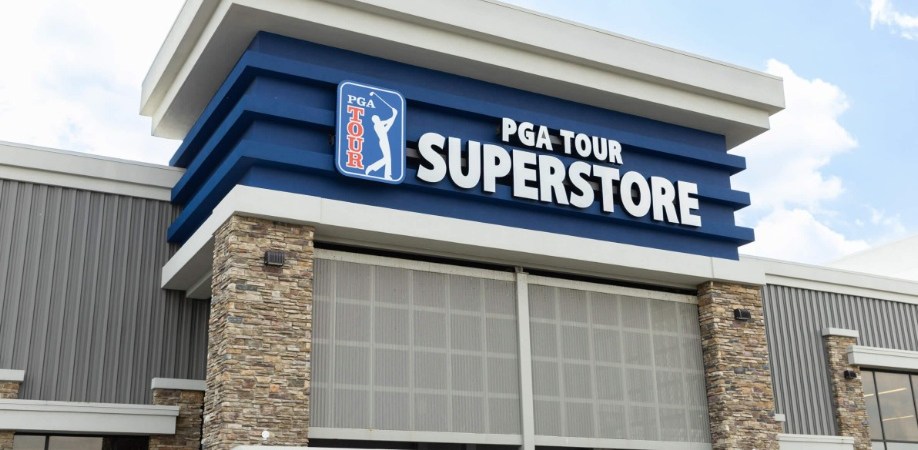
PGA TOUR Superstore has doubled its sales since 2019, while seeing 80% brick-and-mortar store growth since. With 76 retail locations in 28 states, the PGA TOUR golf specialty retailer licensee is opening locations in Grand Rapids, Mich., Louisville, Woodbury, Minn., St. Louis, and Norwalk, Conn., in 2025 with more locations to be announced later this year.
These brick-and-mortar locations give golfers across the skill and interest spectrum from novice to scratch the ability to come into a physical location and get their hands on clubs, apparel, accessories and more. PGA TOUR Superstore aspires to be a one-stop shop for golfers, so beyond selling equipment and apparel, it offers free club fittings, club repair and regripping, hitting bays, putting greens, ball fittings and lessons.
“For us, we know 40% of all purchases start online,” Thomas said. “People go to the website and are doing their homework. It can be overwhelming so they go online to get as much education and information as they can, then they come in the store to touch and feel the product before they purchase it.
“… We really want to see that omni-channel process, and we do see it.”
Ecomm
Ecommerce serves as an endless aisle for retailers by offering more products in more sizes and colors than retail.
Not only are retailers relying on their online presence to bring consumers into the purchasing funnel, they’re also more keen to leverage social media to reach golf’s growing audiences and demographics.
Long gone are the days of just buying ads on the Golf Channel as original equipment manufacturers (OEMs), retailers and brands are meeting young, tech-savvy consumers where they are: on Instagram, TikTok, YouTube, etc.
“The growth of golf coming out of the pandemic had a major impact on the content and influential voices shaping the game,” said Bryan Weinstein, Dick’s Sporting Goods Director of Category Marketing, Golf. “We took notice and have intentionally broadened our view of how to share our brand and what we offer with the modern golfer.”
To create content that appeals to a relevant audience—AKA young golfers who have a lifetime of potential playing and spending ahead of them—Dick’s Sporting Goods recently announced the creation of Varsity Team, an influencer program that utilizes content creators passionate about sharing their knowledge with other athletes. DSG enlisted the help of creators Sarah John, J.T. Byrne and Chase Selsor in golf.
Personalization
While reaching golf’s growing audience is obviously necessary, arguably even more vital is ensuring each golfer’s retail experience is personalized. Just like every golfer’s swing is unique, so is their preference (and needs) in clubs, apparel, accessories and gear. Today’s golfer cares just as much about highlighting their personality and interests on the course as much as they do scoring low, whether it’s through engraved ball markers, collegiate alma mater head covers or stylish polos.
Streetwear-inspired brands like Malbon, Metalwood and Bogey Boys expand a golfer’s wardrobe beyond khakis and polos, while legacy brands including adidas and FootJoy are embracing golf’s growing style on and off the course.
“Golfers are viewing footwear and apparel not just as style choices, but as important pieces of equipment that help them play better and feel confident,” Weinstein said. “What you wear can impact how you feel, and how you feel affects how you play. … As the game continues to evolve, we’re evolving right alongside it with an assortment that reflects how today’s golfer wants to show up.”
Beyond a golfer’s wardrobe, personalization is extremely important as it pertains to equipment. Rather than walking into a store and grabbing a stock set of clubs off the rack, OEMs and retailers offer individualized club and ball fitting experiences, well aware that each golfer’s skillset and needs vary.
Not only do they offer high-end equipment for diehards, but these retailers are carrying more beginner equipment as OEMs strive to make golf easier and more accessible for novices—with the goal of locking in a consumer for life. The PXG Wildcat club line was engineered for novice and occasional golfers with higher lofts and larger club faces to facilitate easier impact, launch and distance, while Bridgestone’s new two-piece, low-compression core ELECTRON golf ball was developed in conjunction with the First Tee specifically for junior players.
Technology
Regardless if the consumer is a scratch golfer scouring the minutiae of their swing or someone buying a first set of clubs, technology plays a huge part in ensuring they’re set up for success with the proper equipment.
Retailers, OEMs, pro shops and even indoor simulator chains like Five Iron leverage state-of-the-art technology to build consumer trust and justify any purchase through data, especially for those getting into the game who may be overwhelmed with all of the metrics and costs.
“Going through a fitting process with any manufacturer and instilling that we’re leaving no stone unturned and getting the equipment that could suit and benefit us the most is going to lead to better scores and more fun on the golf course,” PXG Master Fitter Dayton Federley said.
Obviously it’s hard to predict whether or not golf will continue this unprecedented growth and momentum. Whether or not more people continue to get into the game, the goal for OEMs and retailers is to retain existing customers, regardless of where they sit on the spectrum.
Ensuring accessibility, engagement and trust in a personalized manner is the key to keeping customers coming back year after year, whether or not they’re buying the latest and greatest $600 driver each offseason or not.
“Golf is an opportunity to disconnect from technology and connect with people,” Thomas said. “… The more we can bring attention to that and focus on the benefits that golf provides, I think that is really what our focus is going to be on. … We’ll continue to get out there and be good community partners and continue to be advocates for the game of golf. On the business side, all those things will come if we achieve those objectives.”
 Michael LoRé