Golf wasn’t just a hobby for Richard Berle growing up. It was a game that served as a generational thread between him and his grandfather and father, spending endless hours playing Penmar Golf Course in Venice, Calif.
So it was no surprise the seasoned entrepreneur wanted to share the game and similar experiences with his sons, Evan and Elijah, despite both being more keen to prioritize ollies than birdies as professional skateboarders.
“My first dream was: let’s get out on the golf course,” Richard said.
As he passed the game onto the next generation of Berles, Richard, also an avid fitness enthusiast, noticed a gap in the market for golf-specific fitness that not only helped people improve their game on the course, but, more importantly, their lives off it.
And thus, Golf Fit was born—unsurprisingly, while pedaling on a Peloton.
“We really think we’ve got something that is going to be able to impact people,” said Richard, who has dealt with a recurring wrist injury due to limited mobility. “Not only their golf, but their health, their everyday lives and their long-term relationship with the game.”
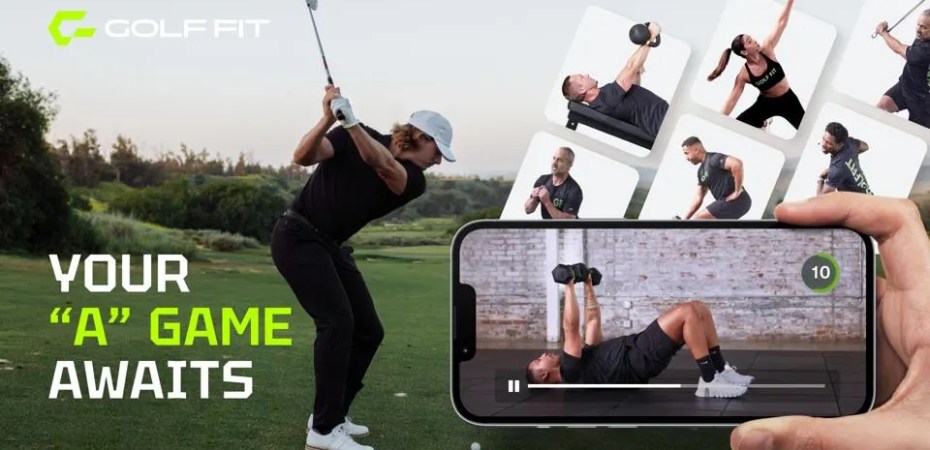
Guided by trainers including Sheldon Roberts, one of Golf Digest’s Best Fitness Trainers in America (2025-26), Jeni DelPozo and Dr. Bret Hoffer, Golf Fit users can select from 70+ workouts ranging in skill level and focus from pain-free to mobility, strength and pre-round warm up. The app costs $24.99/month or $199.99/annual.
With a steady stream of new content being released each month, Golf Fit integrates adaptive AI technology to craft more personalized training plans that adjust and evolve in response to each user’s progress and needs.
While other golf training and fitness apps and programs are catered more toward diehard golfers looking for that extra edge to shave a stroke here and there, Golf Fit aims to cast a wider net across endemic and non-endemic golf communities, especially as the game continues to grow and expand beyond the clubhouse thanks to golf-entertainment venues like Topgolf and streetwear-inspired brands like Malbon.
According to the National Golf Foundation, 28.1 million Americans played golf on a course in 2024—the most since 2008—while another estimated 19 million exclusively played off-course forms of the game.
“I think one of the things that we really focused on when we were designing these programs was to make it accessible so that regardless of what equipment you had, you were able to find a video that worked for you,” Evan said. “We wanted to create programs that said, ‘If you have access to a full gym, here’s a workout for you,’ but we also wanted to make sure we had programs so if you’re in your apartment in Manhattan and only had a band, you can still do stuff to get ready for golf.
“… You don’t need all this equipment in order to get a great workout in, and we’ve just given you the opportunity to be able to do it.”
Currently self-funded, Golf Fit isn’t looking to fundraise at the moment with the Berles well aware of the flexibility they’re afforded during the brand’s early stages to be nimble for decision making and approvals.
They are prioritizing growing the brand’s community in and around golf with the overarching message of: helping people improve their health and wellbeing through the lens of golf.
“Evan and I are really driven by this desire to give back to this game and help golfers play it as well as they possibly can,” Richard said. “And underneath all that is just to help people with this horrible epidemic that we’ve got going on that is causing so many people to live their lives in such an unhealthy way.
“And golf, because of people’s desire to do it so well might be the motivator that gets them from, ‘I don’t really like to exercise,’ to ‘I can’t wait to do my next workout because of how it’s going to make me feel.’”
 Michael LoRé